The song “Hallelujah” by Leonard Cohen has become a musical phenomenon, known for its remarkable versatility and beauty, and has been performed countless times in various arrangements. While Jeff Buckley’s version is the most widely recognized, others—including the original—have faded into the background. My recent discovery of Andrea Bocelli’s 2020 performance with his daughter Virginia, when she was only 8, highlights how new interpretations continue to bring fresh attention to this enduring work.
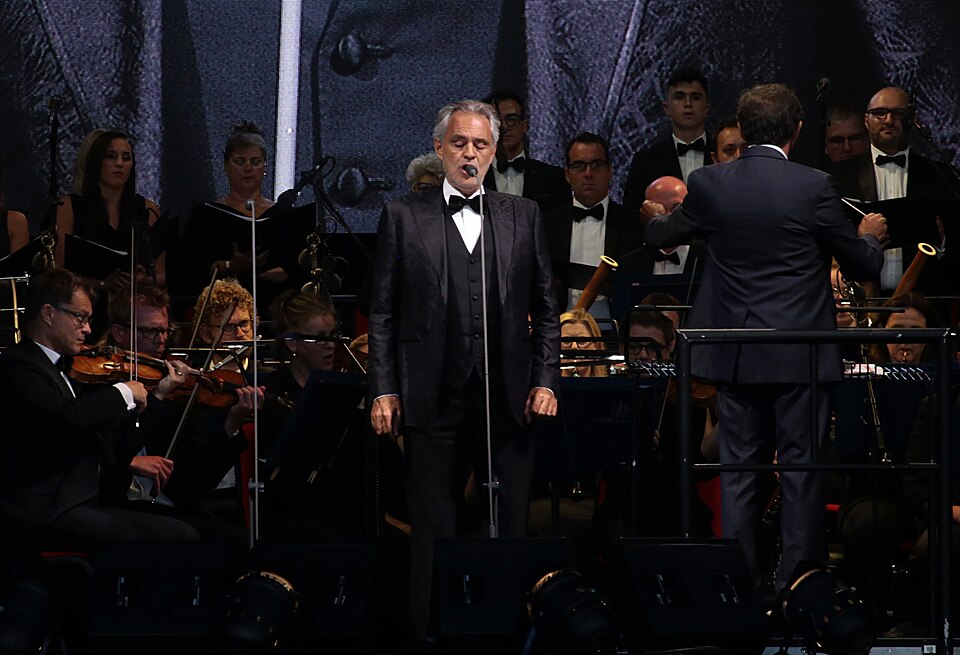
To understand why Andrea Bocelli’s interpretation is so special, it’s important to consider the song’s history and meaning. Leonard Cohen labored for years crafting “Hallelujah,” a song known for its rich exploration of spiritual and interpersonal love—a complexity echoed in the Bocelli family’s rendition.
Leonard is said to have written between 80 and 180 verses for the song before settling on the first version that was released in 1984. It was largely ignored until John Cale reworked and covered it in 1991, and then Cale’s version was reworked and covered by Jeff Buckley on an album in 1994.
As I said earlier, the song itself took on a life of its own. It didn’t reach Billboard’s chart until after Cohen’s death in 2016. In a sense, the song was born, went through growing pains, and has now reached old age. Unlike something alive, the song can live on forever through those who play or sing it.
This brings us to Andrea Bocelli sharing his rendition of the song. Bocelli is one of the world’s most famous living opera tenors, and for good reason. He’s sold more than 80 million albums worldwide, making him the highest-selling singer in classical music history. His voice is rich, vibrant, emotive, and powerful—much like “Hallelujah.”
In this performance, we see Andrea and his 8-year-old daughter on stage together. She hands him an acoustic guitar, and they exchange some words in Italian before taking a seat on the stage together. Andrea begins plucking the famous chord progression in the key of C. The progression Cohen penned into the opening verse of the song. A stroke of genius that lets the listener in on the inner workings of what they’re hearing and feeling. A peak beyond the curtain, if you will.
Virginia takes this verse, and you might expect the voice of an 8-year-old to sound exactly like that —immature and untrained —but this is the daughter of Andrea Bocelli. She’s got pipes. When we reach the “major lift,” we get a taste of her vocal range, and it’s powerful, not even just for one so young.
They share the chorus. Virginia watches her father intently for cues. It’s a heartwarming sight. Andrea takes the second verse in Italian as the orchestra at the foot of the stage joins in. For the rest of the song, we hear the power behind Andrea’s voice. Virginia stays wrapped in watching her father’s performance and joins in for the choruses.
This performance by Andrea and Virginia Bocelli is perhaps the most emotionally powerful version of “Hallelujah” I’ve encountered. It rivals even my first experience hearing Buckley’s take. The combination of Andrea’s commanding voice, the orchestra’s drama, and the tender presence of his daughter creates a rendition that breathes new life into the song’s legacy—demonstrating how each new interpretation can renew and redefine a classic.